Brilliance is generally considered to be the most important feature when considering a diamonds beauty. If brilliance is compromised then the effectiveness of a diamonds fire and scintillation is also reduced. Hence brilliance is given twice the weighting.
My experience buying and selling diamonds with a Firescope™ , and later the hand held Ideal-Scope showed that consumers prefer diamonds with a strong red light return and a black eight pointed star pattern. Diamonds with combinations of slightly steeper and deeper crown and pavilion angles than Tolkowskys' have more white leakage. Shallow combinations display increased amounts of blackness (Harding’s head obstruction).
The table shown here is the original raw data. Minor modifications have subsequently been made to smooth the chart based on observations with actual diamonds and their Sarin reported proportions. However the essential data is only very slightly modified. Mr. Pike has subsequently reproduced similar results using the same format.
Note the area of poor performance that we define as a No Go Zone (NGZ).
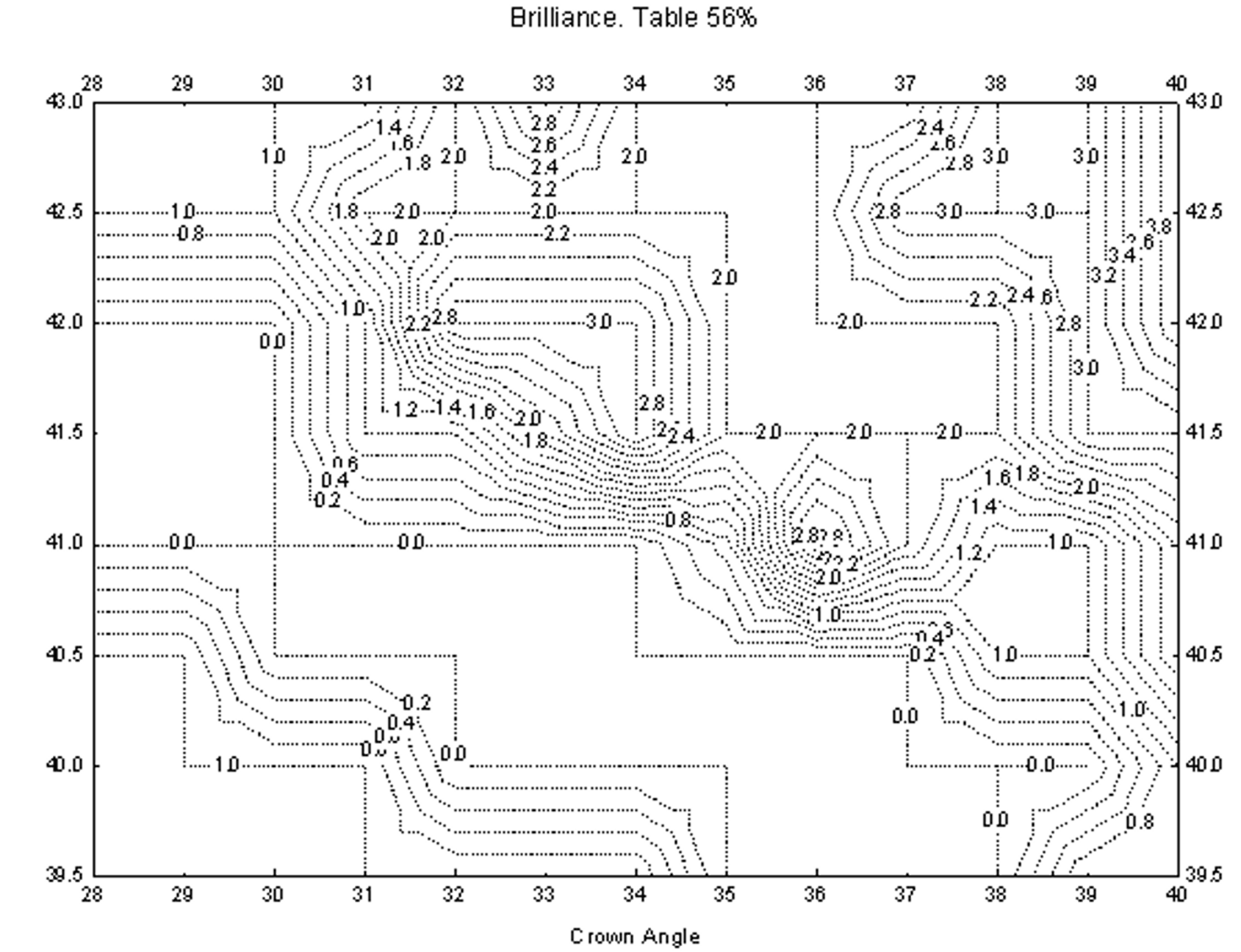
Figure 13. Comparative brilliance scores estimated for each diamond on grids for crown and pavilion angles shown and for table sizes of 53% to 65% in 1% increments.