Spread or apparent size of a diamond is the most important factor to many diamond buying consumers. Spread has been ignored in previous cut grading systems, but HCA compares and rates it.
A diamond that looks bigger than another is not necessarily more beautiful, but it is more desirable. A diamond of the same weight but larger diameter is said to ‘spread’ more. Spread is a matter of desirability rather than a beauty factor.
Size equals ‘desirability’ (and it does count).
First time consumers often mistakenly consider the spread of a diamond to be directly related to its weight. Even within the trade, the depth percentage is used as a value factor in determining spread, but depth percentage is a poor metric because girdles and crowns have more impact on weight a diamond’s pavilion.
For many consumers everything about the beauty of a diamond is salesmanship, because after all even ugly diamonds are beautiful; to some size is all that counts, and having advice about the size rather than the weight is critical.
So given the importance of spread, why has it been completely ignored?
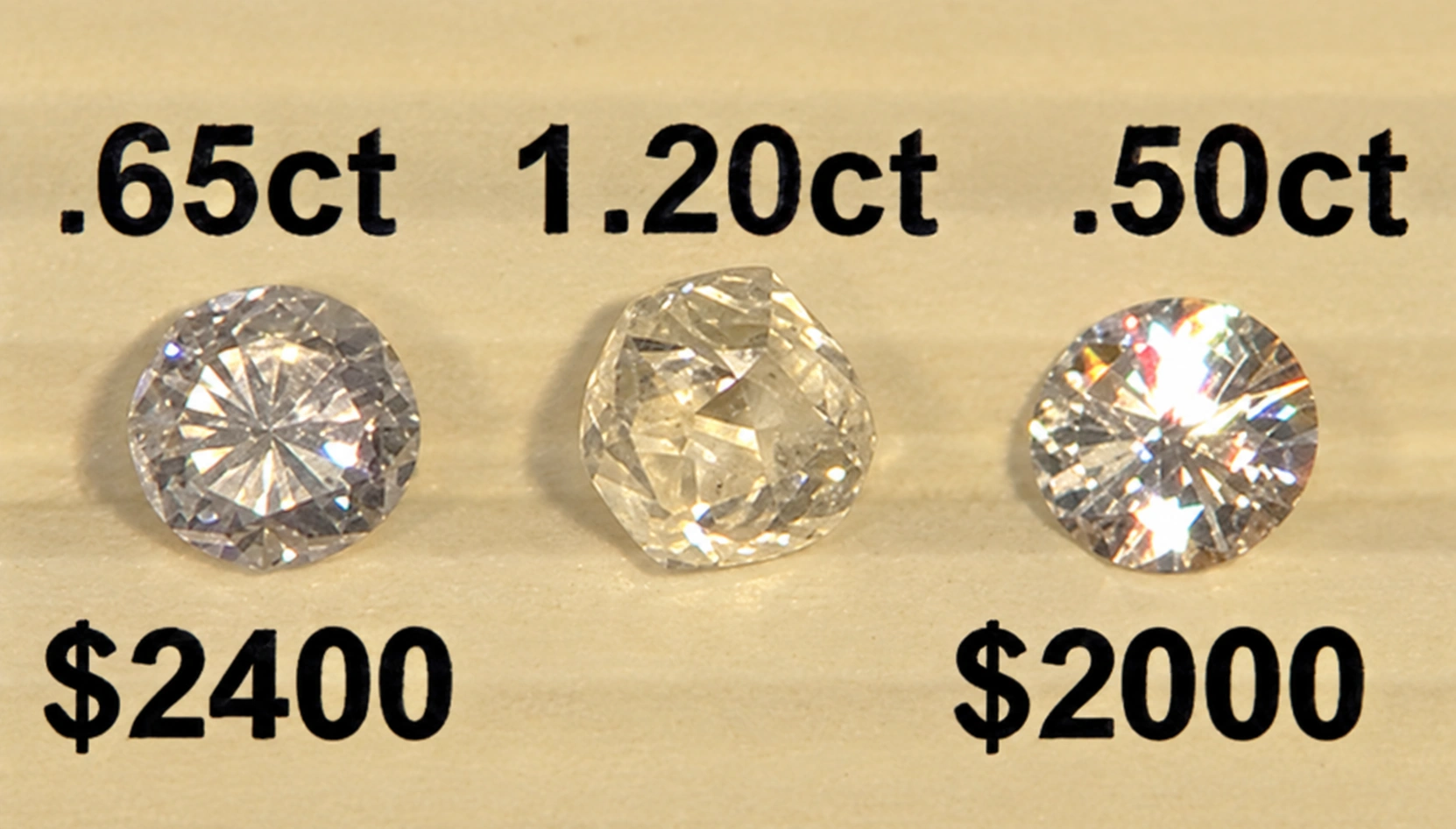
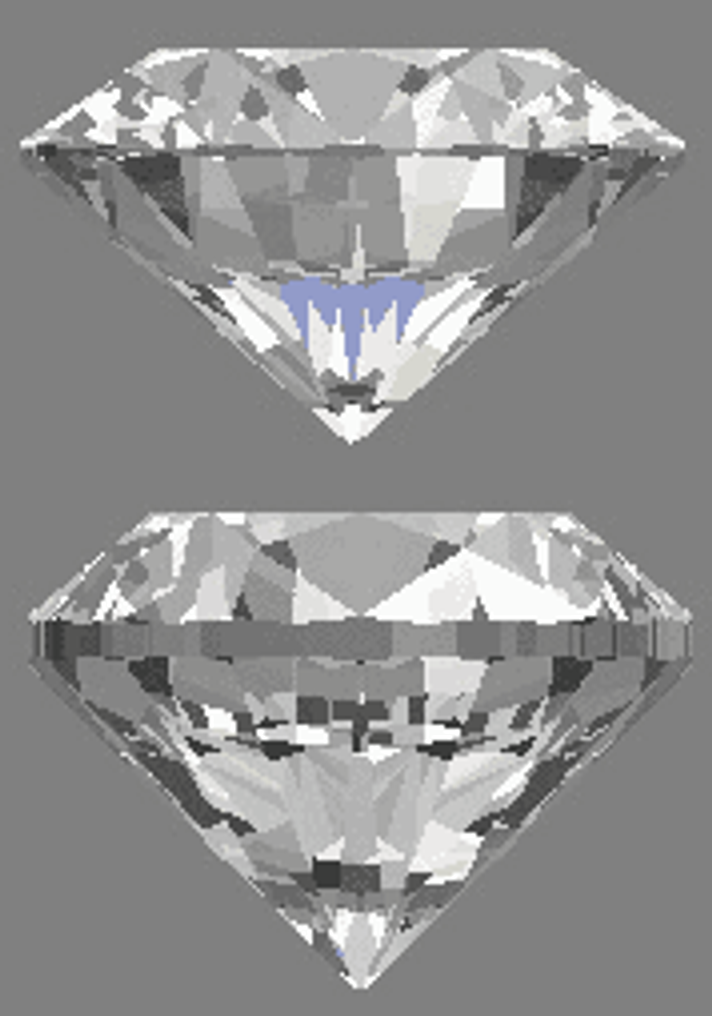
These 2 diamonds both measure 5.2mm in diameter, but the 0.65ct lifeless one is 20% deeper than the 0.50ct ideal cut.
The HCA system calculates a spread penalty for a diamond based on the three main geometric components: crown, girdle and pavilion.
We choose to give a zero penalty for a diamond with a 40° pavilion, 32.5° crown, 58% table and a 1% girdle, diamonds with better spreads also rate zero. The worst score of 2.0 is given to a diamond with a 10% girdle, 40° crown, 54% table and 43° pavilion. Stones with even worse spreads are not further penalized.